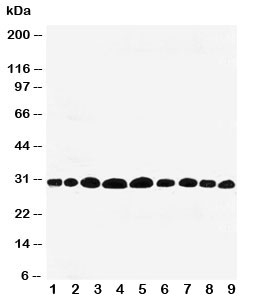
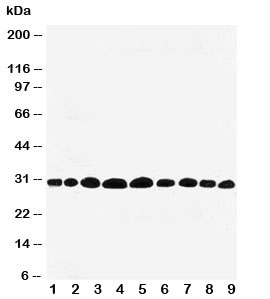
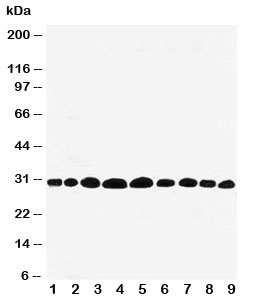
Prohibitin, also known as PHB1, is a protein that in humans is encoded by the PHB gene. White et al.(1991) mapped the gene to chromosome 17 by analysis of human-mouse somatic cell hybrid cell lines using a genomic fragment of human prohibitin DNA isolated from a library using the rat prohibitin cDNA clone. By in situ hybridization, they localized the gene to 17q21. Sato et al.(1992) isolated the human homolog of the rat gene and mapped it to 17q12-q21 by in situ hybridization. Proliferation of tumor cells depends on new blood vessel formation (angiogenesis) that accompanies malignant progression. Anti-cancer therapies using angiogenesis inhibitors or cytotoxic agents targeted to the vasculature of tumors have been evaluated in clinical trials. Although white fat is a nonmalignant tissue, it has the capability to quickly proliferate and expand. Furthermore, it is highly vascularized. Rupnick et al.(2002) showed that nonspecific angiogenesis inhibitors can prevent the development of obesity of mice.
Formulation
0.5mg/ml if reconstituted with 0.2ml sterile DI water
Host
Rabbit
Immunogen Region
An amino acid sequence from the C-terminus of human PHB1 (KLEAAEDIAYQLSRSRN) was used as the immunogen for this Prohibitin antibody (100% homologous in human, mouse and rat).
Isotype
IgG
Predicted Reactivity
Human, Mouse, Rat
Reactivity
Rat, Human, Mouse
Recombinant
No
Antigen
Prohibitin
Uniprot
P35232
Format
Antigen affinity purified
Purification
Antigen affinity
Storage
After reconstitution, the Prohibitin antibody can be stored for up to one month at 4°C. For long-term, aliquot and store at -20°C. Avoid repeated freezing and thawing.
Applications
IHC-P, WB, ICC
Dilution
Western blot: 0.5-1ug/ml,Immunohistochemistry (FFPE): 0.5-1ug/ml,Immunocytochemistry: 0.5-1ug/ml
 Loading ....