Loading ....
Contact us to order
Tel
+1 866.986.9598
Fine Test
view supplier detailsCredit card payments now incur a 3% fee.
Fine Test
view supplier detailsCredit card payments now incur a 3% fee.
| Mfr.No. | EH12080 | ||||||||||||||||||||||||||||||||||||||||||||||||||||||||||
| Sensitivity | 18.75pg/ml | ||||||||||||||||||||||||||||||||||||||||||||||||||||||||||
| Detection Range | 31.25-2000pg/ml | ||||||||||||||||||||||||||||||||||||||||||||||||||||||||||
| Reactivity | Human | ||||||||||||||||||||||||||||||||||||||||||||||||||||||||||
| Assay Duration | 4 hours | ||||||||||||||||||||||||||||||||||||||||||||||||||||||||||
| Assay Type | Sandwich | ||||||||||||||||||||||||||||||||||||||||||||||||||||||||||
| Description | This kit is based on Double antibody-Sandwich ELISA detection method and takes 4h assay time. The microplate provided in this kit has been precoated with anti SATB2 antibody. Add standard and properly diluted sample into relevant well respectively. After incubation, wash unbound components. Add biotinylated detection antibody. Then, it binds with SATB2 bound to precoated antibody. Wash unbound components and add HRP-Streptavidin Conjugate (SABC). Wash unbound components again and add TMB substrate solution. Then, TMB was catalyzed by HRP to produce a blue color product that turned yellow after adding a stop solution. Read the O.D. absorbance at 450nm in a microplate reader. Calculate the concentration of SATB2 in the sample by plotting standard curve. The concentration of the target substance is proportional to the OD450 value. | ||||||||||||||||||||||||||||||||||||||||||||||||||||||||||
| Alternative Names | DNA-binding protein SATB2 ELISA Kit, Special AT-rich sequence-binding protein 2 ELISA Kit, SATB2 ELISA Kit, KIAA1034 ELISA Kit | ||||||||||||||||||||||||||||||||||||||||||||||||||||||||||
| Detection Method | Double Antibody | ||||||||||||||||||||||||||||||||||||||||||||||||||||||||||
| Kit Components |
|
||||||||||||||||||||||||||||||||||||||||||||||||||||||||||
| Recovery |
Add a certain amount of SATB2 into the sample. Calculate the recovery by comparing the measured value with the expected amount of SATB2 in the sample.
|
||||||||||||||||||||||||||||||||||||||||||||||||||||||||||
| Linearity |
Dilute the sample with a certain amount of SATB2 at 1:2, 1:4 and 1:8 to get the recovery range.
|
||||||||||||||||||||||||||||||||||||||||||||||||||||||||||
| Specificity | Specifically binds with SATB2 , no obvious cross reaction with other analogues. | ||||||||||||||||||||||||||||||||||||||||||||||||||||||||||
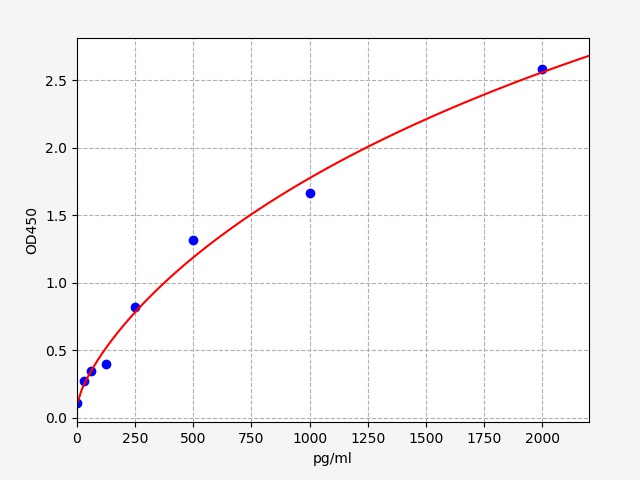
| Standard Curve |
This product is detected by QC department and meets performance required in the manual. (Laboratory Humidity: 20%-60%; Temperature: 18°C -25°C; Equilibrate TMB substrate to 37°C before staining. After adding into the ELISA wells, incubate for 15min at 37°C in dark.) Due to different assay environments and operations, assay data below and standard curve are provided for reference. Experimenters should establish standard curve according to their own assay.
|
||||||||||||||||||||||||||||||||||||||||||||||||||||||||||
| Sample Type | Tissue lysate, Cell lysates, Cell culture supernatants, Plasma, Other biological fluids | ||||||||||||||||||||||||||||||||||||||||||||||||||||||||||
| Components |
Microplate,Lyophilized Standard,buffer,SABC,Label antibody,SABC,TMB,stop solution Kit Components
|
||||||||||||||||||||||||||||||||||||||||||||||||||||||||||
| Precision |
Intra-assay Precision: samples with low, medium and high concentration are tested 20 times on the same plate. Inter-assay Precision: samples with low, medium and high concentration are tested 20 times on three different plates.
|
||||||||||||||||||||||||||||||||||||||||||||||||||||||||||
| Background |
UniProtKB/Swiss-Prot Summary for SATB2 Gene
|
||||||||||||||||||||||||||||||||||||||||||||||||||||||||||
| Stability |
Perform the stability test for the sealed kit at 37°C and 2-8°C and get relevant data.
|
||||||||||||||||||||||||||||||||||||||||||||||||||||||||||
| Notes | For Research Use Only | ||||||||||||||||||||||||||||||||||||||||||||||||||||||||||
| Usage Notes |

|
||||||||||||||||||||||||||||||||||||||||||||||||||||||||||